
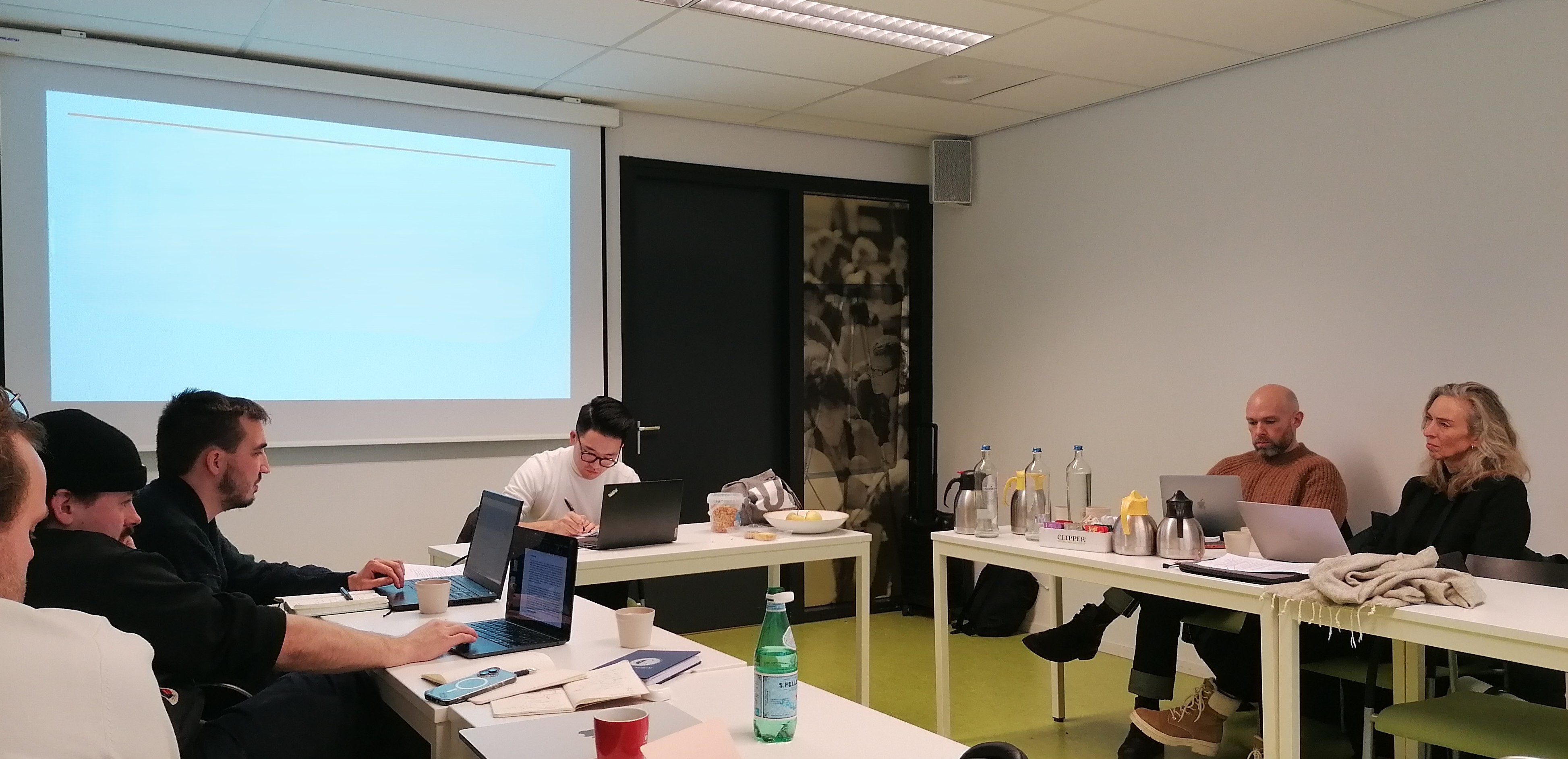
On January 28 and 29, the Platform Wars project co-hosted a workshop focused on the growing relationship between technological innovation and geopolitical contestation, in collaboration with the ReGlobe project at VU Amsterdam and the CODE project at Vrije Universiteit Brussel. Under the theme of ‘Tech Rivalry and the Global Power Reordering,’ we spent two days sharing ideas, presenting papers and work-in-progress, and discussing recent geopolitical developments.
Following an introductory round table with the three project leaders, Naná de Graaff, Marijn Hoijtink, and Antonio Calcara, as well as Niels ten Oever, leader of the Critical Infrastructure Lab at the University of Amsterdam, a total of eleven papers were presented and actively discussed over the two days. We covered a wide range of topics, including the role of semiconductors, biotech, 5G, and space tech in geopolitical rivalries among the US, China, and the EU; the specifics of defense procurement in the age of software-based warfare; and the societal and socio-technical dimensions of algorithmic warfare.
At a conceptual level, attention focuses on the decline of the liberal global order and its effects on and origins in shifting public-private relations. Which analytical concepts can help us understand these changes? What continuities and discontinuities become clear in current power dynamics and private-state dependencies? Are they driven by the geopolitical ambitions of powerful states and their leaders, the structural constraints of global capitalism, or strategies of emerging elites? And how can we connect these dimensions?
Without finding conclusive answers to these big questions, the interdisciplinary and stimulating exchange during our workshop opened up new perspectives for all participants and provided plenty of food for thought for upcoming projects. We would therefore like to sincerely thank all participants, and we look forward to a continued collaboration.


